
What Can and Can't Go in a Roll-Off Dumpster?
A clear list of what you can put in a dumpster and what's banned, plus tonnage tips for Bryan and College Station. Questions? Call (877) 779-2783.
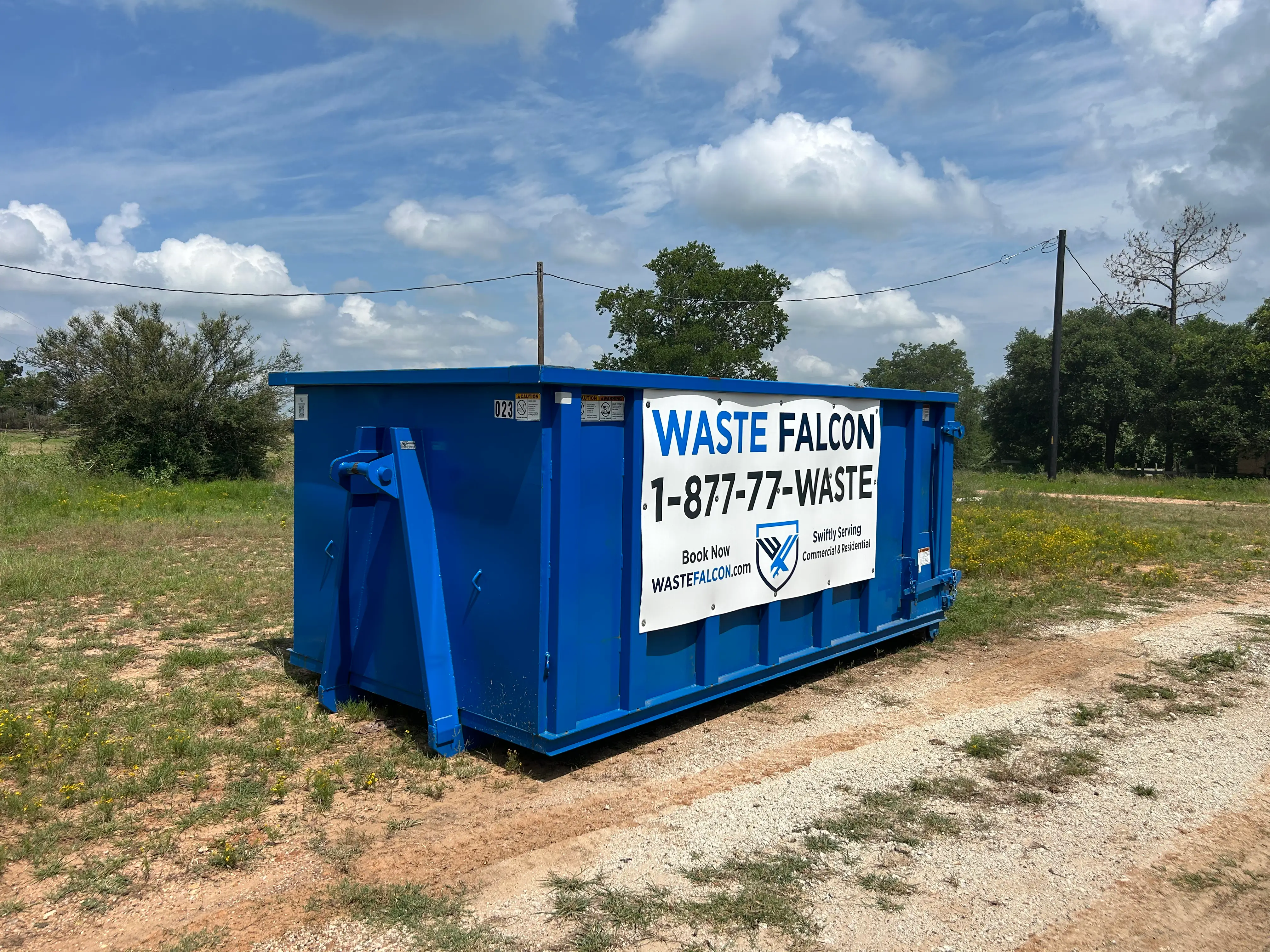
Most everyday junk can go in a roll-off dumpster. Furniture, wood, drywall, flooring, cardboard, yard debris, and general household clutter all load right in. A short list stays out, mostly hazardous items like tires, batteries, wet paint, and appliances with refrigerant. When you are not sure about an item, just ask. Call (877) 779-2783 and we will tell you if it goes in the box or needs another path.
This guide breaks down what is allowed, what is banned, and why, so you fill your dumpster the right way.
What You Can Put in a Dumpster
The good news is that the allowed list is long. For a typical cleanout or renovation in Bryan or College Station, most of what you are clearing is fair game.
Here is what loads in with no special handling:
- Household junk: furniture, mattresses, toys, decor, boxes, and general clutter
- Renovation debris: drywall, lumber, flooring, cabinetry, trim, and fixtures
- Roofing: shingles and underlayment, though they are heavy, so mind the weight
- Yard material: branches, brush, leaves, sod, and small stumps
- Heavy material: concrete, brick, tile, and dirt, in the right size box
- Bagged trash: bagged household waste from a big cleanout
That covers the vast majority of projects. Whether you are clearing a garage, gutting a kitchen, or hauling off a whole estate, the bulk of your pile belongs in the dumpster.
One question we hear a lot is about mixing material types. Can renovation debris and household junk go in the same box? Yes. You do not need to sort allowed items into separate loads. Wood, drywall, old furniture, and bagged trash can all ride together. The only sorting that matters is pulling out the banned items, which we cover next.
What Can’t Go in a Dumpster
The banned list is short, and it is mostly about safety and the law. These items need special handling, so they cannot ride to the landfill in a roll-off.
Here is what stays out, and what to do with each instead:
- Tires: take them to a tire shop or a county drop-off. Many accept them for a small fee.
- Batteries: car and lithium batteries go to an auto parts store or a hazardous waste event.
- Paint, solvents, and chemicals: dry out latex paint and trash the empty can. Take wet paint and solvents to a hazardous waste site.
- Appliances with refrigerant: fridges, freezers, and AC units need the refrigerant pulled first. We take these for a small per-unit fee.
- Electronics and TVs: Texas keeps these out of landfills. Use a store take-back or an e-waste recycler.
- Asbestos and other hazardous waste: this needs licensed removal. It never goes in a roll-off.
The theme is simple. Can the item leak, catch fire, or harm soil and water? Then it has its own path. Keeping it out of the box protects you, our crew, and the community.
Why These Items Are Restricted
It helps to know the reason behind the rules, since it makes the list easy to remember. Landfills are built for solid, stable waste. The banned items break that in one of three ways.
Some are toxic. Paint, chemicals, and refrigerant can seep into the water or the air. Some are dangerous. Batteries and some electronics can spark or catch fire when crushed. And some are just regulated. Texas law keeps tires and electronics out of landfills to save space and push recycling.
Follow the rules and you avoid two headaches. You dodge a fee for a flagged load. And you keep bad stuff out of the wrong place. It is a little sorting up front for a lot less trouble later.
Not sure if an item counts as hazardous? A quick rule helps. Read the label. If it warns you to keep it away from skin, flame, or drains, it does not belong in the box. When the label is gone or you still are not sure, just call and ask. We would rather answer a quick question than pull a bad item off a full load.
A Word on Weight and Tonnage
Volume is not the only limit on a dumpster. Weight matters just as much, and it is where projects get surprised.
Every rental includes a set tonnage allowance in the flat rate. Go over it and there is an overage charge by the ton. Light material like furniture and cardboard almost never hits the limit. You will fill the space long before you hit the weight cap.
Here is a quick way to picture it. One ton is about 2,000 pounds. A pile of old furniture and boxes might fill a whole box and still weigh under a ton. A load of broken concrete can pass a ton in just a few feet of the same box. Same space, very different weight. Knowing which kind of load you have tells you which size to reach for.
Heavy material is the opposite. Concrete, brick, tile, dirt, and roofing get heavy fast. A dumpster half full of concrete can weigh more than a full box of household junk. That is why we steer dense debris into a smaller size. It reaches the weight limit before it fills a big container. When your load is heavy, tell us up front and we will size it so you are not paying overage.
A mixed load needs a little thought too. Say you are gutting a kitchen with both light cabinets and heavy tile. Toss the heavy stuff in first and spread it across the floor of the box. That keeps the weight balanced for pickup and gives you a clean read on how full you are. Piling all the concrete in one corner just makes the box awkward to haul.
Match the Guide to Your Material
Different materials load differently, and we have a guide for the common ones. If you are clearing a specific item, start with the matching walkthrough:
- How to dispose of a mattress
- How to dispose of concrete
- How to dispose of construction debris
- How to dispose of old appliances
- How to dispose of old furniture
- How to dispose of yard waste
Each one covers the best route for that material, and when a dumpster is the smart move. For the container itself, browse our dumpster sizes or check pricing for flat-rate details.
When a Dumpster Isn’t the Right Tool
Sometimes the job is not a dumpster job at all. If you have only a few heavy items and no crew to lift them, full-service hauling makes more sense. Our sister company BCS Junk Removal sends a team to load and haul, so you never touch the heavy stuff.
A roll-off is the right call when you have a big volume to clear on your own schedule. You load it as you go, and we handle delivery and pickup. For a mixed cleanout with lots of material, that is usually the cheapest and easiest path.
Think about your timeline too. A dumpster sits on site for the length of your rental, so you can fill it over a weekend or across a longer project. Full-service hauling is a one-and-done visit. If your job is a quick single pickup, the crew wins. If it stretches out and you want to load at your own pace, the roll-off wins. Not sure which fits? Tell us the scope and we will point you to the cheaper option, even when that is the other service.
Frequently Asked Questions
Can I put a mattress in a dumpster? Yes. Mattresses load right in, though they are bulky, so plan for the space. See our mattress disposal guide for details.
Can I throw away a refrigerator? Yes, but the refrigerant must be removed first. We take appliances with refrigerant for a small per-unit fee.
Are tires allowed in a roll-off? No. Tires are restricted from landfills. Take them to a tire retailer or a county drop-off instead.
What happens if I put a banned item in the box? It can flag the load and lead to a fee, since the item has to be pulled and handled separately. When in doubt, ask before you load.
Where do I take household hazardous waste? Paint, solvents, and chemicals go to a household hazardous waste site or collection event. Ask us and we can point you to a local option.
The Bottom Line
Most junk goes in the box. Keep out tires, batteries, paint, chemicals, refrigerant appliances, and electronics, since each has its own path. Watch your weight on heavy loads. When you have a question or a mixed pile, call (877) 779-2783 or see roll-off dumpster rental in Bryan and we will get you the right container.